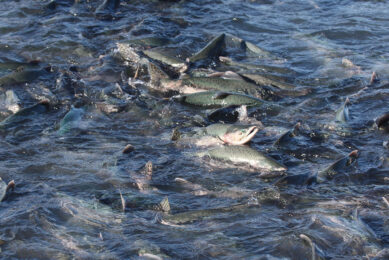
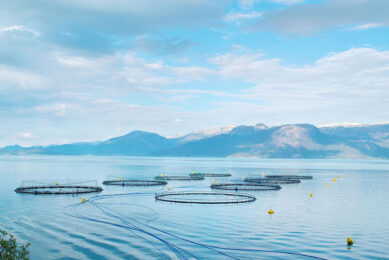
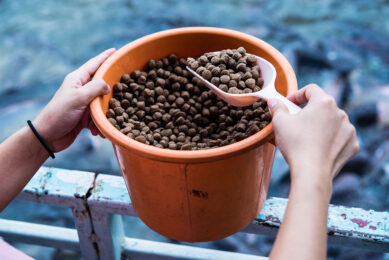
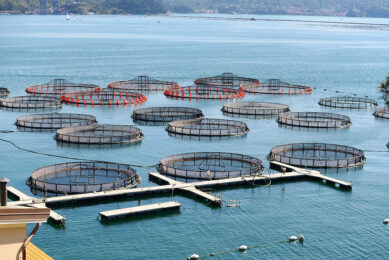
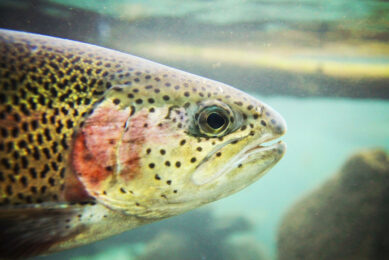
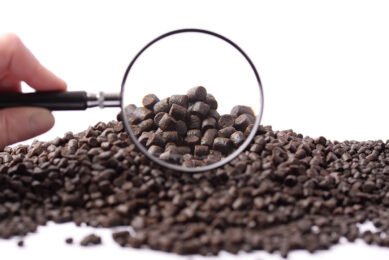
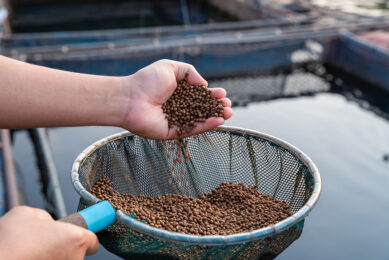
The aqua culture industry is rapidly growing as a result of the growing demand for fish. In addition, over the years more knowledge has been gained how to commercially produce tropical fish in cages, which has resulted in the farming of over 200 fish species today. Also shrimp farming is growing rapidly.
Introduction
Fish and shrimp diets used to contain a large proportion of fish meal, but due to costs,
the fish meal is often replaced by vegetable proteins. More companies are
getting involved in supplying ingredients for the aqua feed industry. In fish
farming, nutrition is critical because feed represents 40-50% of the production
costs. Read more >
Depleting fish stocks
Most farmed marine fish and shrimp species are carnivorous. They are either
fed whole fish (mainly in the case of tuna) or pellets made of, amongst other
things, fishmeal and fish oil. In both cases, the fish used as feed are caught
from the wild.
Read more >
Plant based feed ingredients
Raw materials of marine origin are still widely employed in fish feeds. One
of the major challenges in fish nutrition is to ensure their successful
replacement. Read more >
Fish meal replacement studies
The composition of plant raw materials differs in
particular from that of marine raw materials in terms of amino acids and fatty
acids. Read more >
Essential amino acids
With respect to proteins, plant raw materials do not
provide the same quantity of essential amino acids (EAA) as fish meal, and this
replacement must be accompanied by supplementation of the diet in synthetic EAA.
Read more >
DDGS in fish feed
Fish feed is a major expense for many aquaculture operations. New research by
Agricultural Research Service (ARS) scientists shows that ethanol co-products,
such as Dried Distillers Grains with Solubles (DDGS) can provide protein for
fish feeds at a lower cost than the soybean-corn combinations commonly used.
Read more >
Fish feed processing
Today's expectations are that the fish feed supplier can produce a product
that hits precise quality targets in terms of size, durability, density and
nutritional composition at a highly competitive price. Proper fish feed
processing is therefore very important. Read more >
Fish feed storage
Because fish feeds usually contain relatively high amounts of fish meal
and/or fish oil, they are very susceptible to rancidity. In addition, ascorbic
acid is highly volatile, but critical to normal growth and development of most
species of fish. Read more >
Aquafeed articles
Below you can find a direct link to all the articles, which have been
published in Feed Mix or Feed Tech. Read more >
Research on fish nutrition
Below you will find some universities and institutes that are strong in
aquaculture and aquafeed nutrition. Read more >
Companies involved in aqua feed/ingredients
Below we have listed a few producers and ingredient companies and some
other useful web links. The list is not complete however, if your company is
missing please send us an email (info@allaboutfeed.net). Read more >